
Directions
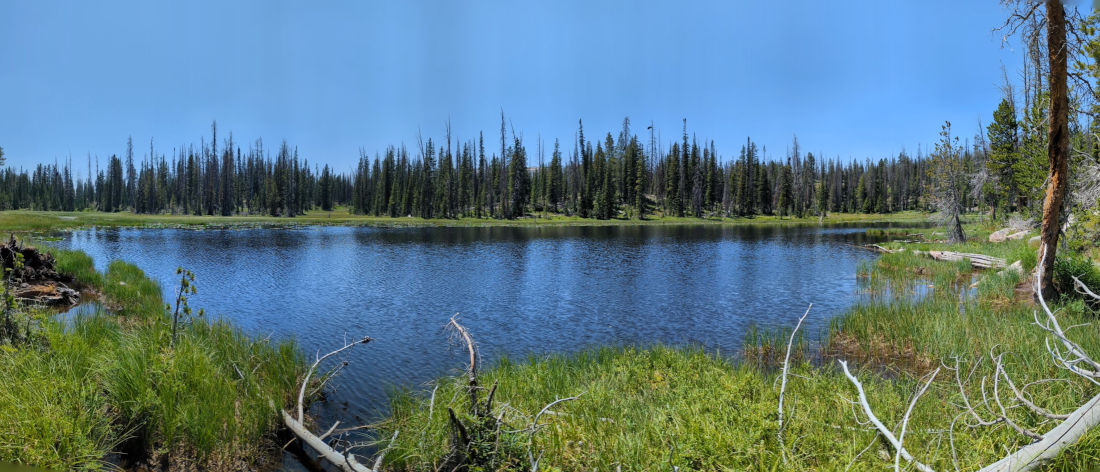
Upper Lily Lake A-24 also called Ponds Lake by Google Maps is located in Summit County, Utah. The lake lies within the Provo River Drainage of the Uinta Mountains. I can be accessed with a very short and easy hike from the Crystal Lake parking lot. From the Mirror Lake Highway take the turn off for Trial Lake then follow FR-41 for 0.7 miles to the Washington Lake Campground – Crystal Lake turn off. Follow this road for 0.5 miles do no turn on the Washington Lake Campground but instead continue to the Crystal Lake parking lot.
This lot fills up quickly as it’s a very popular trailhead to access many lakes. Get there early or completely avoid it on weekends and holidays as it will be slammed.
The Hike
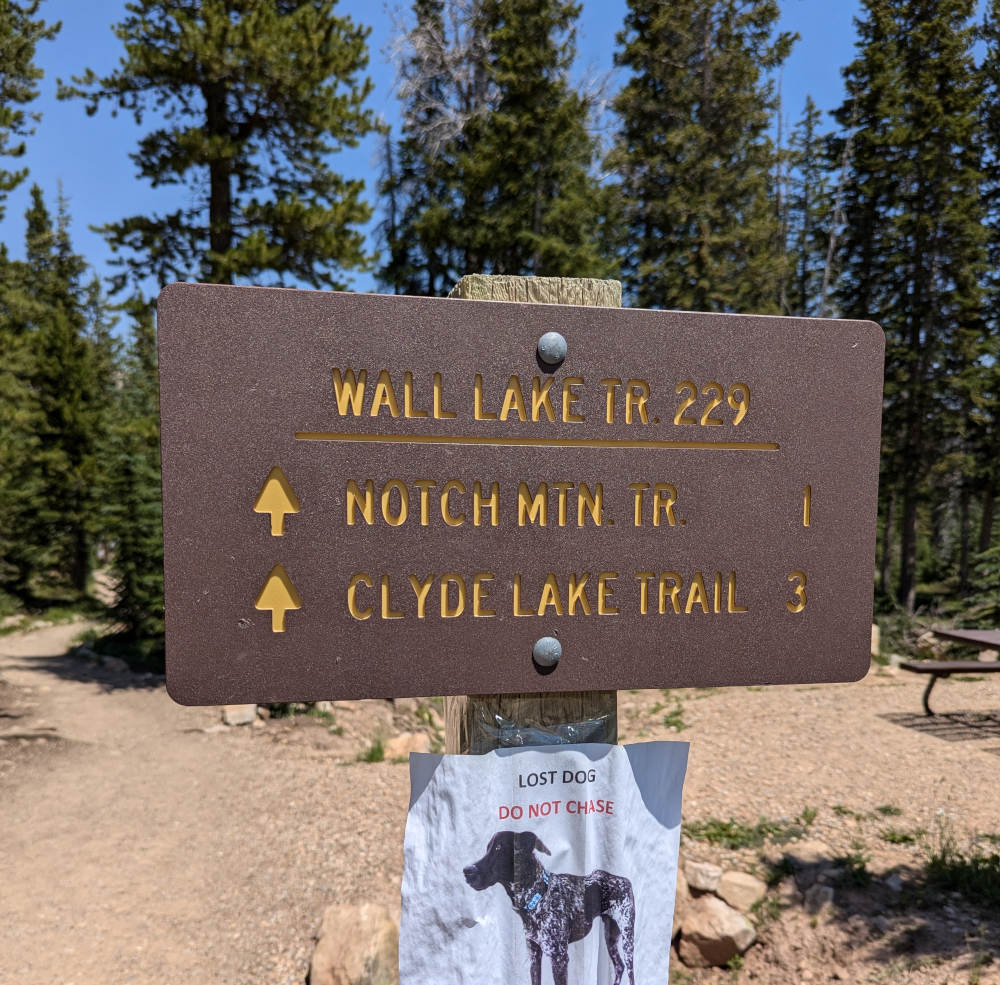
From the Crystal Lake Parking lot head to the north east side of the lot just north of the restrooms. You should see a sign for Wall Lake, Notch, and Clyde. Follow that trail for a few hundred feet. This hike is level with basically no elevation gain and perfect for children or elderly folks. The trail will split the two Lily Lakes. Upper Lily is on the west side of the trail and Lower Lily is on the east side.
The Mystery of the Fishless Lake: Why Lily Lake is a Sanctuary for Plants, Not Trout
Visitors to the High Uintas are often surprised to find that Upper Lily Lake A-24 is not stocked with fish, unlike nearby Crystal or Lower Lily Lake. While it may look like a prime mountain pond, the unique chemistry of this “botanical station” makes it a hostile environment for trout.
1. The Acidic “Tea” Water
Upper Lily is a dystrophic bog, meaning its water is stained brown by humic acids from decaying peat. While most Uinta lakes are neutral, Lily Lake stays naturally acidic, with a pH as low as 5.4
-
Most trout species begin to struggle when the pH drops below 6.0.
-
In water this acidic, fish eggs often fail to develop, and adult fish can suffer from “acid stress,” which damages their gills and makes it difficult for them to regulate their internal salt levels.
2. The Saprolegnia “Fish Fungus”
The 1972 BYU study by Rooney and McKnight discovered that the lake is a hotbed for specialized water molds. One of the most common species found was Saprolegnia ferax, which was present in 64% of the samples taken.
-
Saprolegnia is an opportunistic pathogen known to anglers and biologists as “fish fungus.”
-
In a stressful, high-elevation environment, this mold aggressively attacks fish that have minor injuries or are weakened by the lake’s low pH, leading to high mortality rates.
3. Oxygen Swings and “Winterkill”
Because the lake is shallow (roughly 12 feet deep) and packed with organic “muck,” it faces a double-edged sword regarding oxygen.
- During the summer, as the water warms, the dissolved oxygen levels drop.
- During the winter, the thick layer of ice cuts off new oxygen, while the massive amount of decaying organic matter on the lake bed consumes what little oxygen remains. This creates a high risk of “winterkill,” where any fish in the lake would essentially suffocate before the spring thaw.
Due to the uniqueness of the bog, Upper Lily Lake was set aside for a study location for BYU. These are some of the findings of those studies.
Botanical Station For Brigham Young University
| Researcher | Year | Subject | Major Discovery |
| Christensen | 1961 | Flowering Plants | Established the lake as a permanent BYU research site. |
| Rooney | 1967 | Water Molds | Found 34 species of fungi, many never before recorded in the area. |
| Palmer | 1968 | Algae | Cataloged 208 species, emphasizing the lake’s high biodiversity. |
| Pederson | 1969 | Desmids | Identified 94 species of desmids previously unknown to Utah. |
| Jatkar et al. | 1979 | Diatoms | Proved the lake shifted from alkaline to acidic over thousands of years. |
DWR Historical Data
1999
LILY, UPPER, A-24. Upper Lily Lake is a natural meadow lake with a produclve substrate and boggy banks. It is 3.2 acres, 10,020 feet in elevation, with 12 feet maximum depth. The lake meadow is surrounded on all sides by conifers, Access is 200 yards north of the Crystal Lake Trailhead on the Notch Mountain Trail which passes between Upper and Lower Lily lakes. Upper Lily lies west of the trail. There are several campsites situated along the western lake margin, but spring water is not present. Horse feed is available in limited supply. Upper Lily Lake is not stocked and has been set aside as a botanical station for Brigham Young University.
1964
UPPER LILLY, A-24. 3.2 acres, 12 foot maximum depth. 3/4 mile west of Trial Lake. Area set aside as a botanical station for Brigham Young University. Lake not stocked.
Map Naming Confusion
If you look at most maps you will see Lower Lily Lake as being labeled as Lily Lakes and Upper Lily Lake as having no name. Some maps will list Upper Lily Lake as being called Ponds Lake or BYU Botanical Station. It gets even more confusing when you go 1.5 miles to the east and see another Lily Lake (A-58) and the Lily Lake Campground. If you drive through the Bear River Drainage there is even another Lily Lake (BR-11). From what I’ve read it appears that ponds lake should have been the name of the small pond between upper Lily and Crystal Lake. Although the name got moved over on a map and was reproduced with many maps that followed.
Nearby Places to Fish
Lower Lily Lake A-25 is located a hundred yards to the east.
Crystal Lake A-51 is 200 yards to the south east. Head back to parking lot and take the Crystal Lake trail.
Trial Lake A-61 Go south back to Trial Lake Raod (FR-41) then north a few hundred yards.
Washinton Lake A-23 You can pay to stay at the campground to get direct access or go on a long hike from the Crystal Lake parking lot.