
Directions
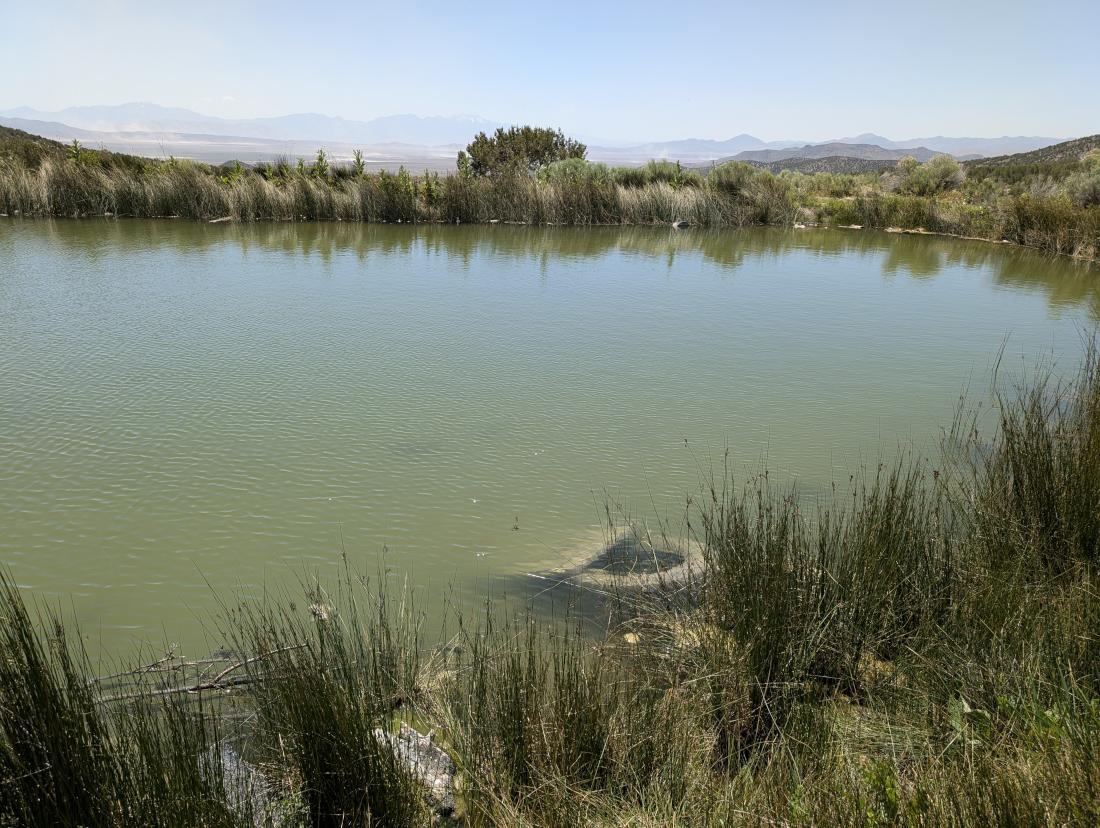
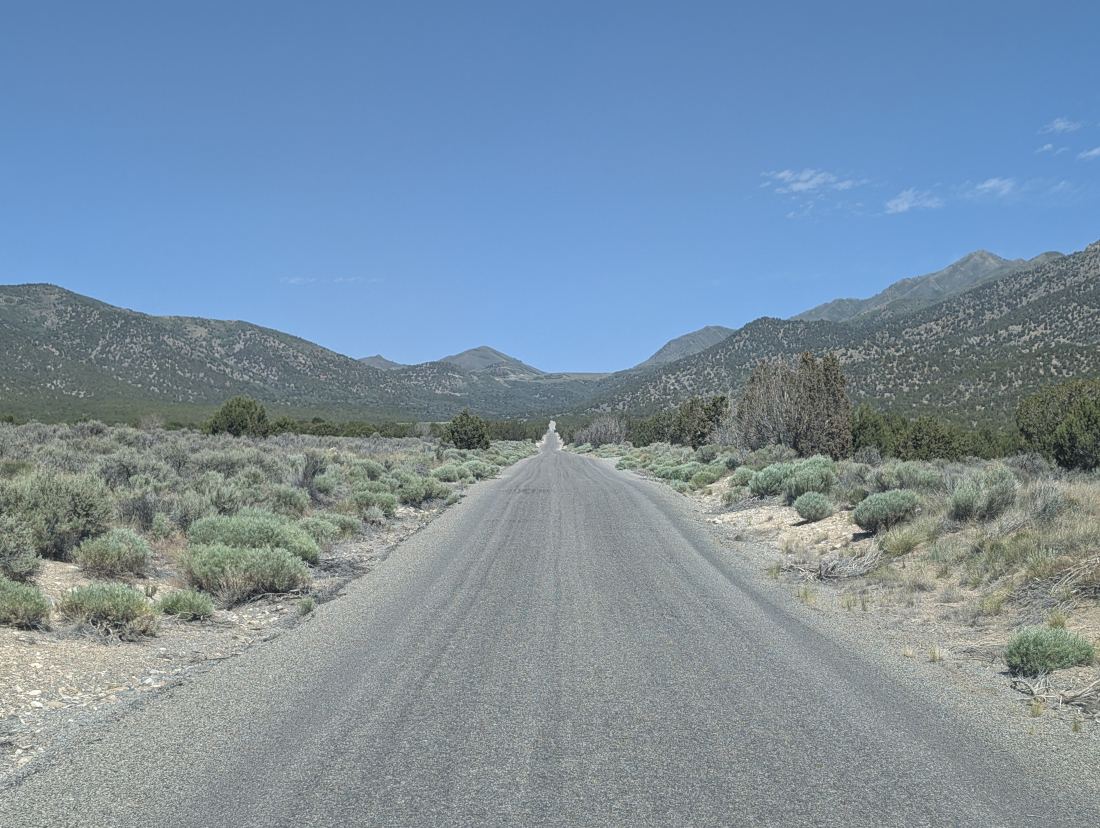
Fuell’s Pond is located in Utah County, Utah in the Cedar Valley. The pond is in the middle of Manning Canyon and can be reached from the city of Fairfield. From Cory B Wride Highway/UT-73 take N Manning Canyon Road for 5 miles. The pond can also be accessed by taking Lewiston Road for 5.2 miles which runs between Cedar Fort and Fairfield.
Fish Species
Likely catch is goldfish, koi, and bluegill.
This pond has been used as an aquarium dumping grounds for several decades. There may be more species in this water that I haven’t identified yet. I talked to a gentleman who had been coming to the pond his whole life. He said back in the 1980’s there was a population of goldfish in it. He told me that when his grandpa died in the 1980’s they emptied his aquarium in the pond since they couldn’t find a home for them. Several of those fish grew to multiple pounds. Osprey frequent this pond since the bright colored goldfish are easy to spot from the air.
History
The lake currently lies in Utah County. However, from 1856 to 1861 this area was known as Cedar County.
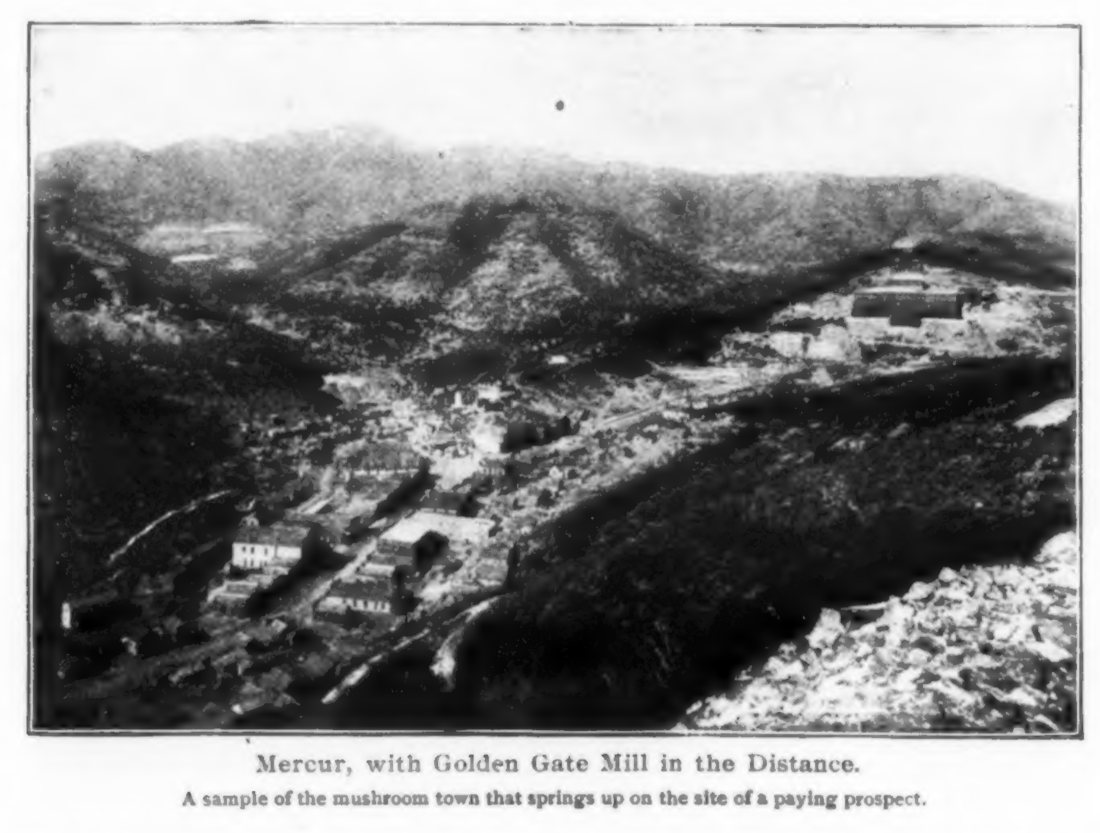
The history of Fuell’s pond and the surrounding Manning Canyon cannot be told without telling the story of the Mercur Mine. There was water in Manning Canyon, which made building a mill possible. Mercur needed a mill to process ore. So Manning Canyon became heavily used by the mine.
Fuell’s Pond Namesake
The Mystery of the Manning Canyon Namesake
If you were to Google where the name of Manning Canyon comes from or ask your favorite slop AI. You will be told definitively that the canyon was named after the ghost town of Manning. That the town of Manning received its name from the Manning Mill and that it was named after L.S. Manning. This is 100% false. Let’s dive in.
In 1982, George A. Thompson’s book Some Dreams Die: Utah’s Ghost Towns and Lost Treasures (page 20). According to Thompson, Manning received its name — as did Manning Canyon — from “one L.S. Manning, a promoter of the use of cyanide in the processing of ores.”
Thompson was a wildly successful author so this claim was repeated often. This was repeated by John W. Van Cott in the book Utah Place Names “Manning Canyon (Utah) is over the summit east of Mercur and drains southeast into Cedar Valley. The canyon was named for L. S. Manning a prominent in the mining industry in both Mercur and Manning”.
The story of Mercur is well documented. You can search all of the historical documents made before 1940 and you never see the name L.S. Manning written in conjunction with Mercur or Manning Canyon. He is falsely said to be one of the pioneers of the McArthur-Forrest cyanide process. The actual folks that used that process are listed below.
To find the name source of Manning Canyon it took me over 2 years of searching. I finally stumbled upon this entry in the Salt Lake Herald from April 16, 1895.
“The little town surrounding the Mercur mill has been designated as a postoffice, under the name of Manning, with Mrs. Mattie E. Edwards as post-master. The office is named after Manning the former owner of the ranch property upon which the mill is located.”
I’m still digging into this but the only Manning I can find who had any land or claims in the area was Moses Manning.
The True Story
In 1888 Gill S Peyton and H. W Brown had been attracted here from Nebraska by the real estate boom. In their wanderings they visited the old Lewiston district. They then met Moses Manning who took them up above the Hickman Spring and showed them a hole in the ground about 30 feet deep. The hole in the ground that Moses had run was the origin of the Mercur Mine. Messers, Dern, Heimrich, and Airis of Fremont, Nebraska were induced to go into the enterprise and the result was that the Manning location was purchased for a price that would be cheap now but in those days was excessively high. – Taken from The Salt Lake Herald 12/28 1895.
I was unable to find any mentions of the canyon of Manning before the arrival of Moses Manning. He was a prominent figure in the time and there is much more evidence the canyon was named after Moses then any other person.
Mercur Mine and Moses Manning
The Following story is taken from Ainslee’s Magazine January 1901. Titled Romances Of The Big Mines, by Eugene Boylan Palmer.
The story of Mercur, Utah, is a striking illustration of the ups and downs of a typical mining camp. Many years ago the Indians there were supreme. Arrowheads and other relics picked up near the site of Mercur indicate that the tribes have at times contested among themselves for that supremacy with these hills as a battleground.
In 1870, silver was discovered on this site and two years later the Carrie Steele mine took out $83,000 in three months, and
the Camp Floyd boom leaped to its height. Lewiston sprang up almost in a day where Mercur now stands. The town was in a fever. There were rich strikes, shootings, wild carousals and claim jumpings. The Mormon Chief mine was transformed into a fort, and battles for its possession were frequent. Then the bottom dropped out. The camp was deserted. The sounds of pick and blast were gone from the deep recesses. Bats fluttered unmolested about the rotting timbers. Coyotes slunk into the tunnels and from this vantage ground howled defiance at the fierce wind of winter. For a time the spectral buildings stood gloomily on their stilts, their paneless windows staring vacantly. Then decay made them sink gradually into desolate heaps, to be swept away later by fire.
In 1880 only one house was left in the entire canyon. There lived solitary Moses Manning, keeping up assessment work on a few claims. In 1881, Arie Pinedo thought he had found quicksilver in the old camp. He staked out a claim and named it Mercur. But the mercury never paid to develop the claim. In 1888, gold was found in assays, but it could not be extracted. A few men became interested and carried on mining in a desultory way without success. The Mercur claim was sold as a ‘‘gold brick’’ to a party of Nebraska ‘‘tender-feet.’’ For years they worked away. Ore was to be found in plenty, and the assays showed large amounts of gold. But every process they tried brought no results in extracting the precious metal. They exhausted their capital, and in 1898 they were $50,000 in debt and at the end of their rope. Gilbert Peyton, one of the owners, who was a Nebraska druggist, visited the mine.
Going through the drawers of the office desk he came upon a pamphlet which had been sent to the foreman. It was a brief description of the cyanide process, then new in America. With his druggist’s experience, Peyton had no difficulty in mixing a cyanide solution and testing it in a cupel with some pulverized ore. But the solution did not seem to percolate the powdered ore, and the experiments were failures. Sick at heart, Peyton left in the cupel a solution with which he had been making tests until it was much diluted, and went to bed. The next morning he noticed that the weakened solution had penetrated the clay cupel. “If the weak solution will go through clay like that, it ought to go through large pieces of ore,’’ he reasoned. The problem was solved. A weak solution and larger pieces of ore were tried, and the process worked like a charm. The owners of the Mercur mine were transformed into rich men. Moses Manning, the patient hermit, made $15,000. The town of Mercur sprang up, phoenix-like, and is to-day one of the richest gold camps in the United States.
Read more about the history of Mercur at UEN, UtahRails.net, Utah Historical Quarterly, Western Mining History, and Fox13.
Manning Cycle Park
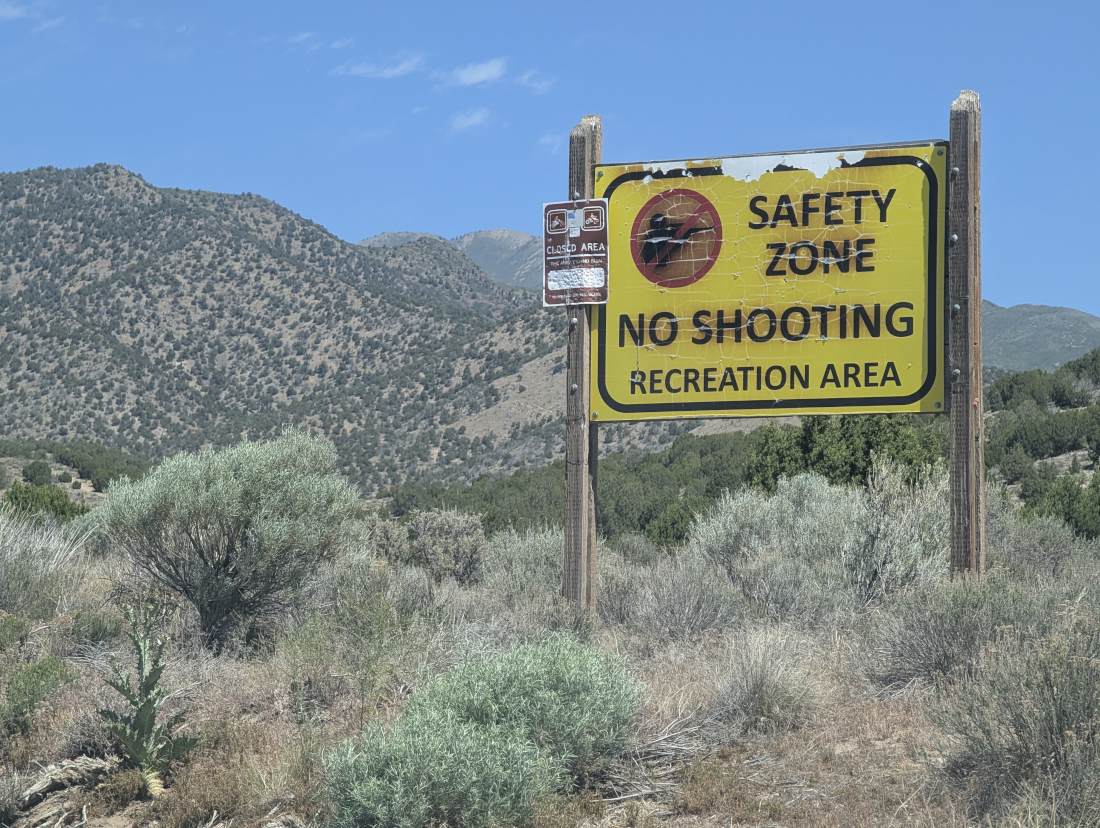
in 1971, a corporation is filed for Manning Cycle Park Inc. The corporation was owned by brothers Luis, Leo, and Leonard Ault. The Ault family owned much of the land around Fuells Pond and used the water for their cattle and sheep.
Leonard who ran the company said he started the park because he was getting lonely riding dirt bikes by himself in Tooele. He wanted to build a community where other people could gather around motocross activities. Prior to this Leonard, was president of the Desert Striders, a Tooele motocycle club.
What started off in 1971, as a monthly motocross tournament quickly became a weekly event. Prizes started at $2,000 and quickly rose above $20,000 for the popular motocross races.
From the Lehi Free Press 10/07/1971 – On Saturday Oct 2nd, in the expert class, in the 100 cc, Lamar Walker was 1st: William Terry 2nd, Ben Cheatwood 3rd. These two men collided in mid air trying to pass one another and ended up in a pond with about 5 feet of water in it.
In 1972, The first ever Utah AMA sanctioned professional motocross event is held at Manning Cycle Park. Soon after many events sanctioned by both the AMA and SRA were held there.
From the Tooele Transcript 05/05/1972. – Utah’s first professional motocross race Sunday attracted upwards of 5,000 spectators and cyclists from as far away as New York State.
Manning Canyon Pollution Risks
In 2,000, the Deseret News wrote an article about the Large amounts of arsenic, mercury and lead in Manning Canyon.
A 2011 report concluded that surface water resulting from runoff downgradient of the Mill Site had concentrations of arsenic and thallium that exceed Minimal Risk.
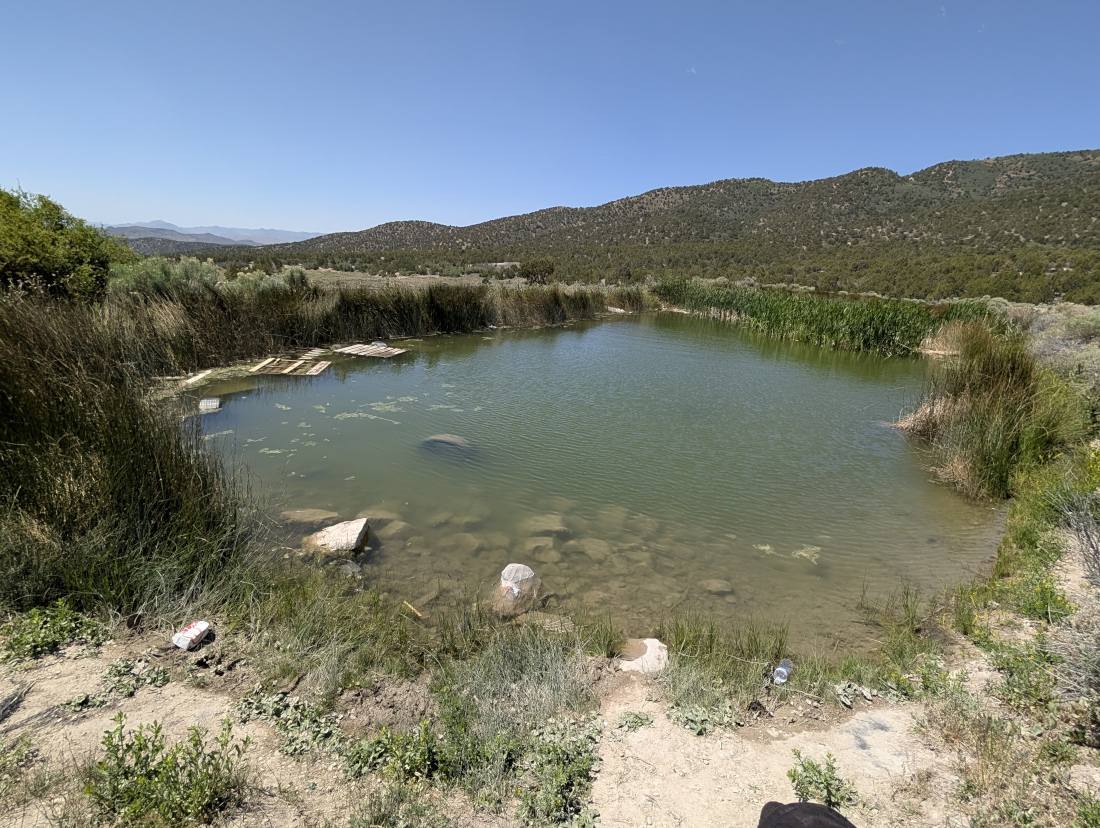
I would love to sponsor a cleanup of Fuells Pond. There is multiple tires, wooden pallets and other debris in the water. There is nails surrounding the pond that would be easy to clean up. Just need a $20 rolling magnetic pick up sweeper from Amazon. This has been documented well on UtahAlex.com. If anyone is interested in helping host a cleanup, please reach out. I could donate food and fishing supplies. I think with a small group of people we could upgrade this fishery in a couple of hours.
Questions or comments? Reach out at [email protected]
Nearby Places to Fish
Big Springs Pond, Atherly Reservoir, Vernon Reservoir, Cherry Creek Reservoir, Rush Lake, Ophir Creek, Settlement Canyon, and Utah Lake.